How I Actually Test Workout Clothes Before Trusting Them for an Hourglass Fit
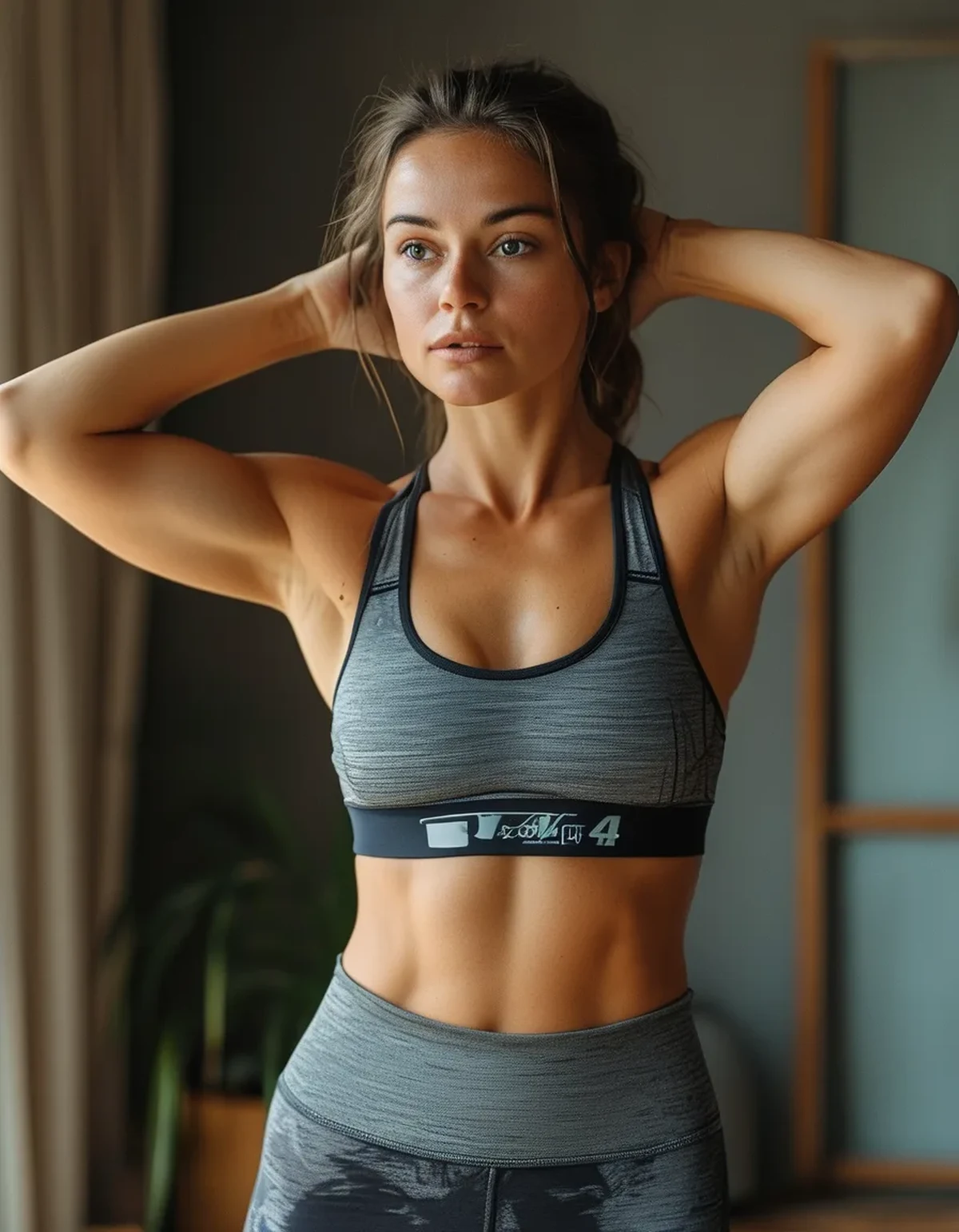
Quick Answer: Standing in front of a mirror doesn’t reveal how clothes will actually behave mid-workout — squatting, reaching overhead, and sitting down in the fitting room catches gapping, rolling, and pinching that a static try-on misses entirely, which matters especially for a pronounced waist-to-hip ratio.
Most return-worthy fit problems only show up once you actually move, not while standing still admiring the mirror.
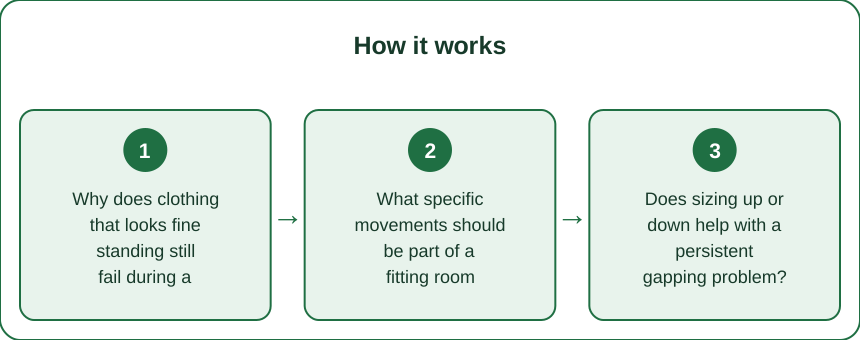
Why does clothing that looks fine standing still fail during a workout?
Standing still puts fabric in its most relaxed, unstressed state, while squatting, bending, and reaching stretch fabric across the waist and hip differently — for an hourglass shape specifically, this is exactly where waistbands tend to gap or roll once the body moves out of a neutral standing position.
What specific movements should be part of a fitting room test?
A deep squat, an overhead reach, and sitting down for a few seconds cover the three most common failure points: waistband gapping at the back during a squat, hem riding up during a reach, and waistband digging in while seated — all common for a defined waist paired with fuller hips.

Does sizing up or down help with a persistent gapping problem?
Not usually — a garment that gaps at the waist while fitting the hips correctly is a proportion mismatch, not a sizing issue, meaning going up a size often just makes the hip and thigh area too loose without fixing the waist gap at all.
5 Mistakes Hourglass Shoppers Make With Workout Clothes
- Only trying items on standing still, missing how they behave in motion. 2. Sizing up to fix waist gapping, which loosens the hip fit without solving the actual problem. 3. Ignoring brand-specific rise and cut differences, assuming one brand’s medium behaves like another’s. 4. Skipping the sit-down test, missing waistband digging that only appears seated. 5. Buying based on how it looks folded on a shelf, rather than how the actual cut is constructed.
FAQ: Hourglass Fit Testing Questions, Answered
Are certain brands more reliably built for an hourglass shape?
Brands that specifically design with a curvier hip-to-waist ratio in mind tend to perform better, but this varies by individual proportions enough that the movement test still matters even when shopping from a ‘curvy-friendly’ brand.
Is a higher rise always better for avoiding waist gapping?
A higher rise often helps but isn’t a guarantee — the cut’s shaping through the waist and hip curve matters as much as where the waistband sits, so the movement test still applies even to high-rise options.
How long does this kind of fitting room test actually take?
Under two minutes per item — a squat, a reach, and a brief seated moment is enough to reveal most fit problems before ever leaving the store or before the return window closes on an online order.
TL;DR:
- Static try-ons miss the fit problems that only show up during movement
- Squats, overhead reaches, and sitting all reveal different failure points
- Waist gapping is usually a proportion mismatch, not a sizing problem
- A two-minute movement test catches most issues before committing
Testing clothes the way you’ll actually use them — moving, not posing — is the fastest way to stop guessing on hourglass activewear fit.
Keep Reading
This article is for general informational and styling purposes only. Fit, sizing, and product availability may vary.
