How to Buy an Autumn Coat When Your Waist and Hips Disagree
Quick Answer: Buy for the largest measurement — usually hips or bust — and fix the waist afterwards, either with a belt the coat already has or with a tailor taking in the side seams. Prioritise coats with a defined waist seam, a back vent or pleat, and set-in sleeves, because those three details are what allow a coat to follow a curve instead of hanging off it.
One coat, altered, beats three that almost fit.
Why do coats fit worse than almost anything else?
Coats are drafted with the least shaping of any garment. They are designed to go over other clothes, so patterns are cut generously and straight, and the waist suppression that a dress or blazer would have is usually reduced or removed entirely.
They are sized off the bust alone in most cases. That single measurement decides everything, which is why the hip is frequently the part that fails on a coat that fit fine in the shoulders.
Outerwear fabric does not stretch. Wool, wool blends and technical shells have almost no give, so the difference between your measurements and the pattern’s shows up immediately rather than being absorbed.
Layering multiplies the problem. A coat that only just closes over a t-shirt will not close over a knit, and autumn is exactly the season where what goes underneath changes week to week.
And the volume sits at the waist by default. Extra fabric in a coat has to go somewhere, and on a frame with a large waist-to-hip difference it collects in the one place you would least like it to.
Which coat shapes actually work?
A coat with a genuine waist seam is the strongest option. A horizontal seam at the waist means the pattern is shaped there, and it also gives a tailor a clean place to work.
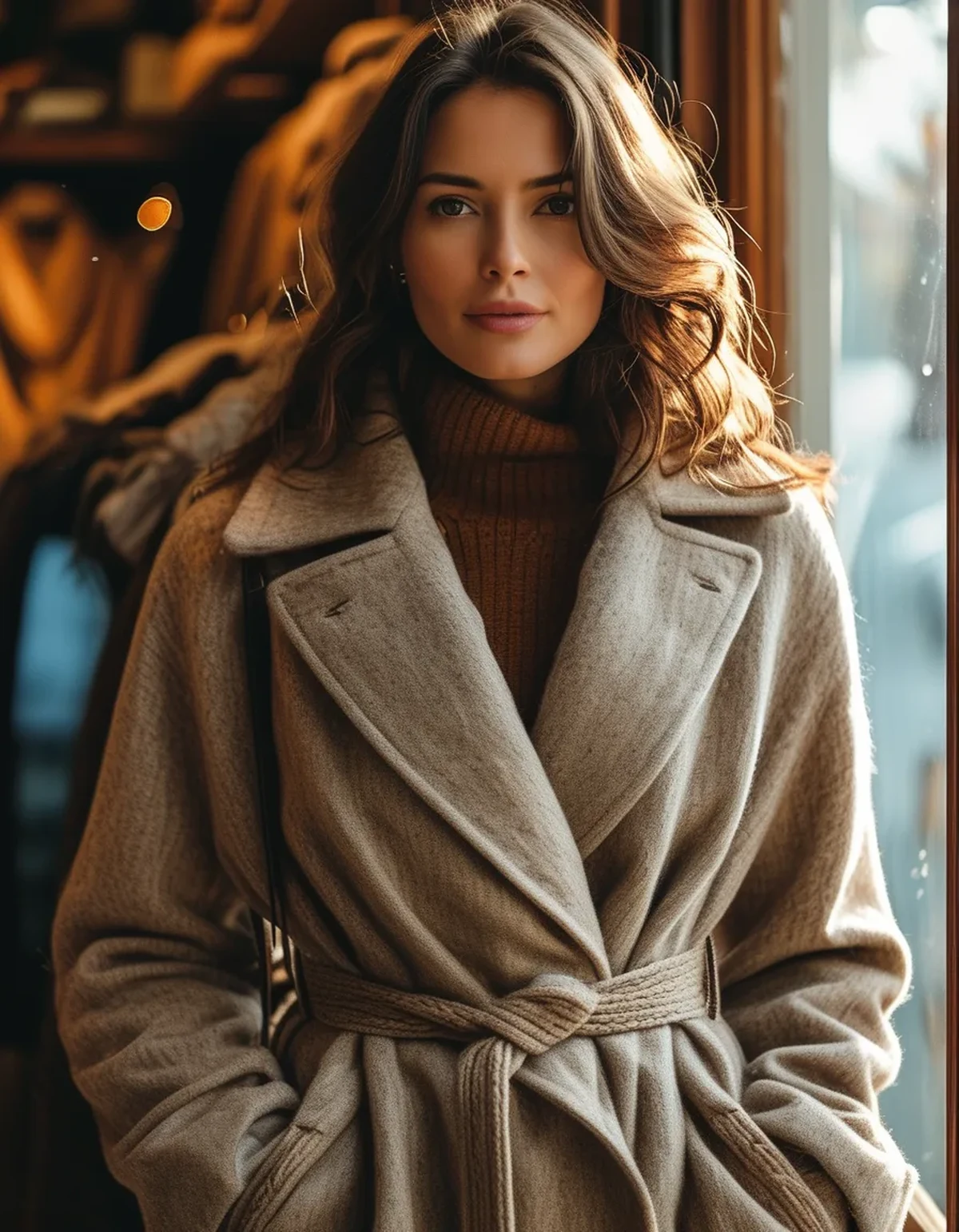
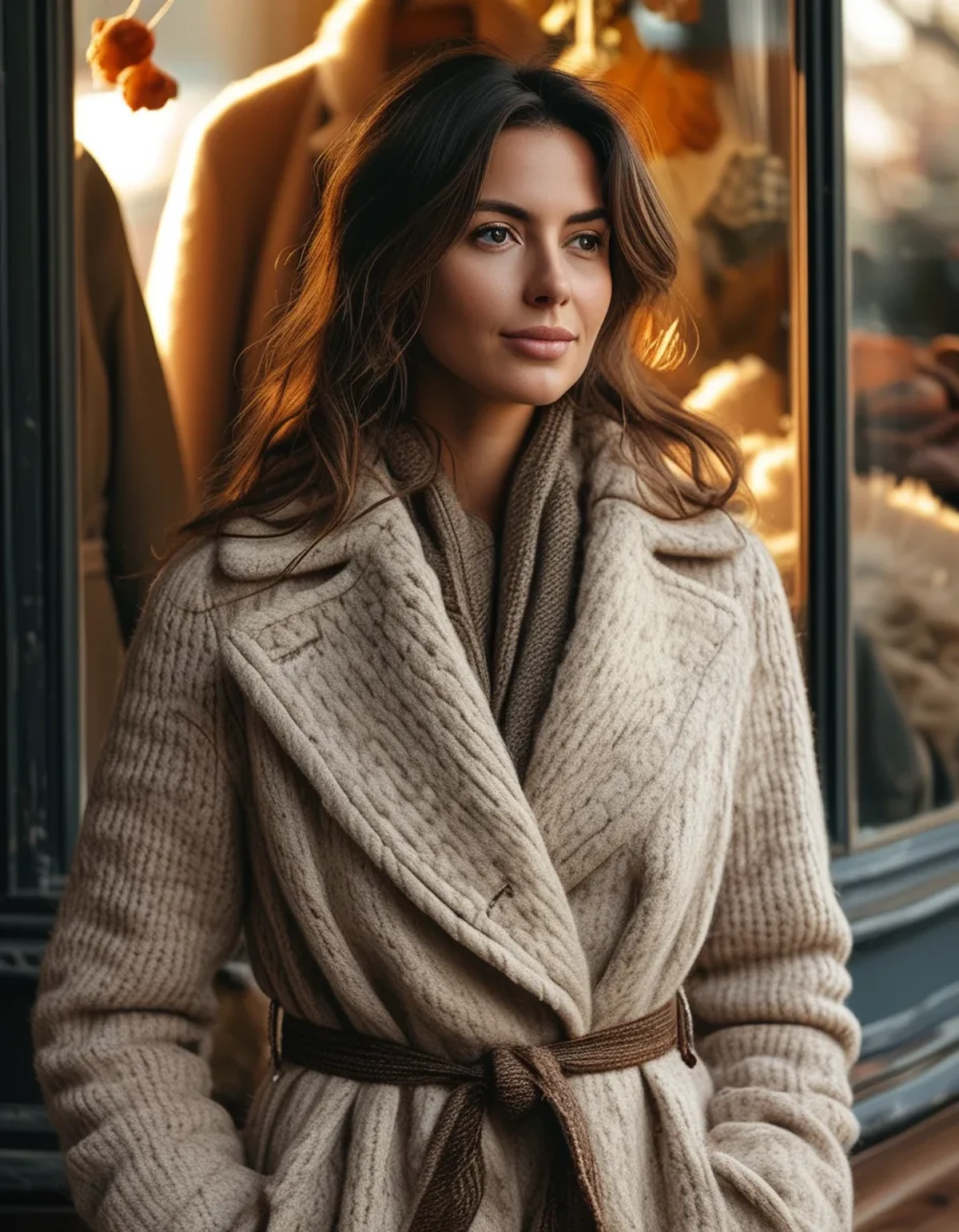
Wrap and belted coats work because you set the waist yourself. The belt does the shaping the pattern did not, and the wrap front accommodates a bust without needing buttons to meet.
Fit-and-flare and princess-seam coats follow the curve by construction. Vertical princess seams shape the torso continuously rather than pinching at one point, which reads far cleaner than a belt cinching over bulk.
A back vent or inverted pleat gives hip room without adding width at the waist. This is the single most useful detail and the easiest to check on a rail.
Straight, boxy and cocoon shapes are the hardest. They can work deliberately as an oversized look, but they will not read as fitted no matter what you do underneath.
Double-breasted needs care. The overlap adds bulk across the bust and can add visual width, though a double-breasted coat with a strong waist seam is often excellent.
What should I check in the fitting room, in order?
Shoulders first, because they are the one thing that cannot be fixed. The shoulder seam should sit at the edge of your shoulder. If it is wrong, put the coat back regardless of everything else.
Then close it over the layer you will actually wear. Take a knit with you in September; the coat you buy over a t-shirt is a coat you cannot wear in November.
Then sit down in it. Coats are tested standing and worn sitting, and a hem that rides up over the hips seated tells you the hip is too tight before the mirror does.
Then raise both arms forward as if driving. Set-in sleeves restrict more than raglan; if it pulls hard across the back, the coat is too small through the shoulders and back, not the waist.
Then look at the side seam from behind. It should hang vertically. A side seam that swings forward at the hem means the hip is too tight and the coat is being pushed out of line.
Finally, check the button placement across the bust. A gap between buttons is a fit failure, not a styling choice, and no belt will hide it.
5 Mistakes Everyone Makes Buying Coats for a Curvy Frame
Buying the size that fits the waist. It is the most tempting mistake because the waist is where you want definition, and it produces a coat that will not close over the hips or bust. Always buy the largest measurement.
Assuming the belt will fix everything. A belt cinched over a coat that is three sizes too big through the body creates a ring of bunched fabric at exactly the widest point of your torso. Belts work on coats that are one size too big, not three.
Skipping the tailor because it feels extravagant. Taking in the side seams of a coat is one of the cheapest and most transformative alterations available, typically far less than the price difference between a poorly fitting coat and a well-fitting one.
Ignoring the lining. A coat can be let out or taken in only as far as the lining allows, and heavily fused or bonded fabrics limit what a tailor can do. Ask before you buy if you plan to alter.
Buying in August for October. Coats bought at the start of the season are tried on over summer clothes and in a warm shop, and both push you toward a size too small. The fifth one is the one that catches most people, because the discount looks like the win.
And the bonus: buying a coat you cannot drive, cycle or carry a bag in. A coat is worn while moving, and the fit test that matters is the one that involves movement.
What can a tailor actually change?
Taking in the side seams and back seam is routine. This is how you turn a coat that fits your hips into a coat that fits your waist, and it is usually a same-week job.
Shortening sleeves is straightforward unless there are functional buttons or complex cuff detail.
Moving buttons is cheap and underrated. Shifting the closure by even a centimetre can eliminate a bust gap entirely.
Adding a belt loop or replacing a belt costs very little and converts a shapeless coat into a shaped one.
Shoulders and armholes are expensive and often not worth it. Reconstructing a shoulder means dismantling the coat, so treat shoulder fit as the buying criterion rather than an alteration.
Hem length depends on the coat. A simple lined hem shortens easily; a coat with a vent, a curved hem or a heavy interfacing is more involved.
Budget the alteration into the purchase price and the whole calculation changes. A well-cut coat one size up plus alterations is almost always a better outcome than a coat that fits nowhere properly.
FAQ: Hourglass Coat Questions, Answered
What length is most flattering on an hourglass frame?
Either above the widest part of the hip or well below it — mid-hip is the length that emphasises width most. Knee length and just-above-knee both work reliably.
Are puffer coats hopeless?
Not hopeless, but harder, because horizontal quilting adds visual width and the filling adds real width. Look for vertical baffles and a drawcord or seam at the waist.
Should I size up in the shoulders to get hip room?
No. Fix the hip by choosing a shape with a vent or flare, or by having the coat altered. Oversized shoulders make a whole coat look borrowed no matter how well the rest fits.
TL;DR:
- Buy for the largest measurement and take in the waist afterwards.
- Waist seams, princess seams, back vents and wrap fronts are the details that work.
- Shoulders cannot be altered affordably — treat them as the pass or fail test.
- Try coats on over the knit you will actually wear, seated as well as standing.
- Budget for a tailor from the start; side seams are cheap and change everything.
Stop hunting for the coat that fits. Buy the one that can be made to.
Keep Reading
This article is for general informational and styling purposes only. Fit, sizing, and product availability may vary.
