Tailoring Activewear on an Hourglass Frame: When It Is Worth It
Quick Answer: Tailoring works on activewear when the problem is excess fabric in one place — a gaping waistband, a too-long inseam, a jacket that fits the shoulders and swims at the waist. It fails when the problem is fabric behavior: twisting seams, rolling waistbands under tension, and anything involving compression. Rough rule — if the fix is removing material, a tailor can help; if the fix is changing how the material stretches, it can’t.
You bought up two sizes for your hips and now there’s a fistful of extra fabric at your waist. The obvious thought is to have it taken in.
Sometimes that’s exactly right and costs twenty dollars. Sometimes it makes the garment worse. Here’s the line.
Which activewear problems can a tailor actually fix?
The ones where there is simply too much fabric somewhere.
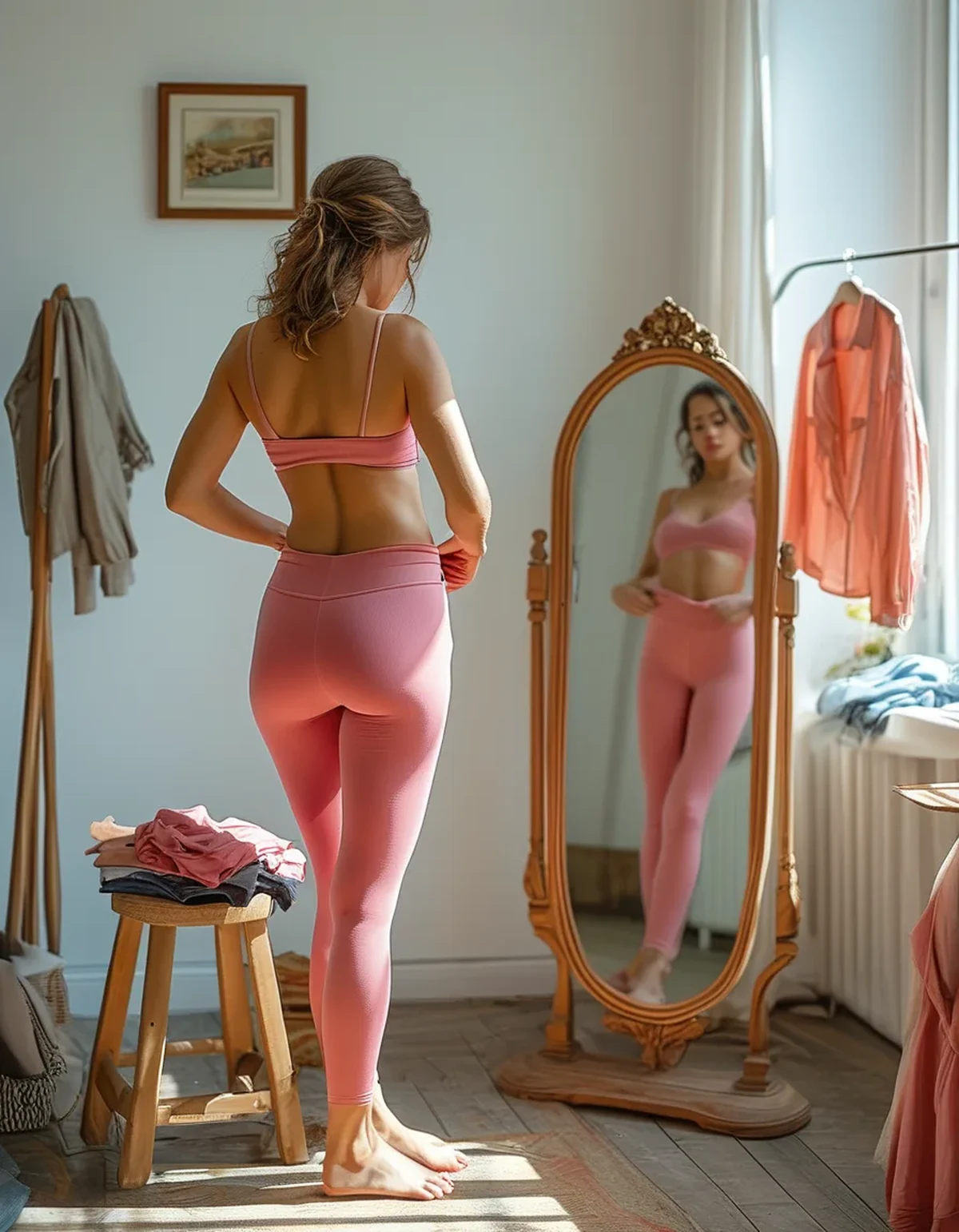
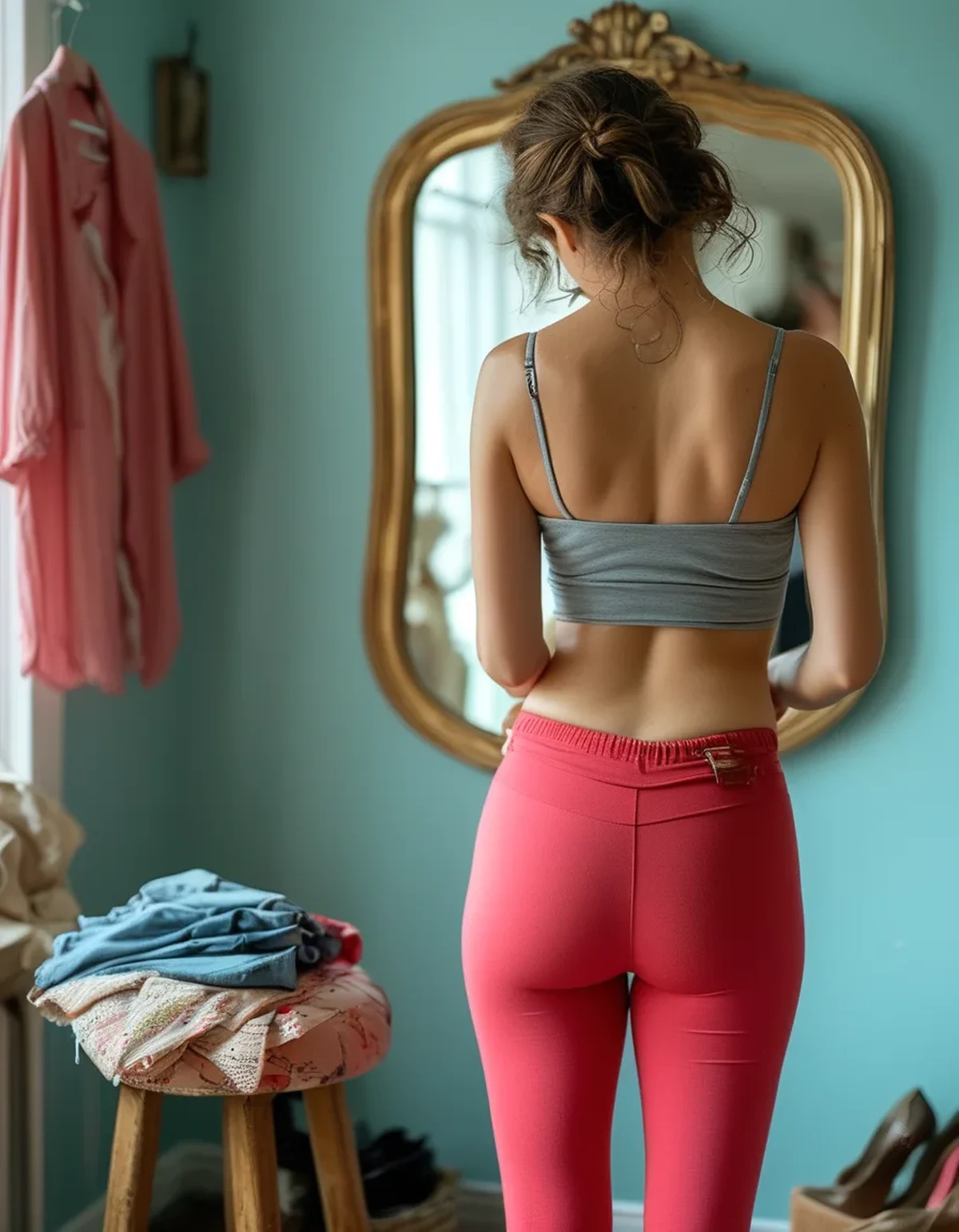
Waistband gap on leggings and joggers. The classic hourglass problem — you sized for your hips, and now the waistband stands away from your back. A tailor can take in the center back seam, and on a garment with a wide waistband this is a genuinely clean fix. Expect roughly $15-30.
Inseam length. Straightforward on joggers, track pants, and most non-compression leggings. Note that hemming a legging with a bonded or cover-stitched hem means losing that finish unless the tailor can replicate it, which not all can.
Jacket and zip-up waist suppression. This is where tailoring earns its keep for an hourglass frame. A jacket that fits your shoulders and bust and hangs straight through the waist can be taken in at the side seams and will look dramatically better. Often $25-45 and worth every dollar.
Tank and t-shirt side seams. Same principle, lower cost. A top that fits across the chest and boxes out at the waist takes in easily.
Strap length on bras and tanks. Simple, cheap, and it solves a lot of fit complaints that people wrongly attribute to band size.
The pattern: all of these are woven-logic alterations on garments where the fabric isn’t doing structural work under tension.
Which ones can’t be fixed, and why?
The ones where the fabric’s behavior under stretch is the problem.
Leggings twisting at the knee. This comes from the fabric’s grain and the seam placement interacting with your leg shape as you move. A tailor cannot re-engineer where the seam sits relative to the grain without effectively rebuilding the garment. Taking in the leg usually makes twisting worse, because it increases tension on the seam that’s already pulling.
Waistband rolling under tension. Rolling happens when the waistband’s tension doesn’t match the curve it sits on. Taking it in changes the tension, and the result is unpredictable — sometimes better, often the same, sometimes worse in a new spot. It’s a genuine gamble rather than a reliable fix.
Compression garments generally. Compression works by exerting a designed level of pressure across a specific area. Alter it and you’ve changed the pressure map. The garment may still be wearable but it’s no longer doing what you bought it for.
Sports bra underband digging. The underband is the structural element that carries the support. Altering it changes the support characteristics, and this is one of the few cases where a bad alteration can make a garment actively uncomfortable to train in.
Anything with bonded seams and no stitching. Many modern seamless pieces are heat-bonded rather than sewn. There’s frequently no seam allowance to work with, and a tailor can’t create one.
The general test: does the garment rely on this fabric being under tension to do its job? If yes, leave it alone.
What Nobody Tells You About Tailoring Stretch Fabric
Two things that determine whether the alteration succeeds, and neither comes up until it’s too late.
Not every tailor works with stretch fabric, and the ones who don’t often won’t tell you. Sewing knits requires a different needle, a stretch stitch, and usually a serger. A tailor who does beautiful work on wool trousers may produce a seam on your leggings that pops the first time you squat — because a straight stitch has no give and the fabric does.
Ask directly: do you sew knits, and will you use a stretch stitch or a serger? A tailor who works with activewear will answer immediately. Hesitation is your answer.
Seam allowance is the hidden limit. Activewear is typically cut with a very narrow seam allowance — often a quarter inch or less, versus the generous allowance on tailored clothing. That means there’s little material to let out, and even taking in has limits before the seam distorts the panel shape. A tailor can usually take in about an inch total at a side seam before the garment starts to look wrong.
The economic reality, which is worth saying plainly: a $30 alteration on a $40 pair of leggings rarely makes sense. On a $120 jacket that fits your shoulders perfectly, it absolutely does. The rule that holds up is to tailor pieces where the fit problem is in one place and the rest of the garment is genuinely right — because that’s the situation buying a different size can’t solve.
A useful sequencing habit: try the brand’s other cuts first. Many brands offer a curvy or contoured fit that addresses the waist-to-hip ratio at the pattern level, and finding one that works is more durable than tailoring every purchase.
How do you decide in the fitting room?
Four questions, in order.
1. Is the problem excess fabric, or fabric behavior? Excess fabric that you can pinch and hold — tailorable. Twisting, rolling, or riding up — not tailorable. This single question resolves most cases.
2. Is everything else genuinely right? Tailoring fixes one problem. If the rise is also wrong and the length is off, you’ve got the wrong garment and no amount of alteration rescues it.
3. Can you pinch the excess and see it improve? Pinch out the gap at the back waistband and look in the mirror. If it looks right, a tailor can get you there. If it just moves the problem elsewhere, it won’t.
4. Does the alteration cost more than a third of the garment’s price? Above that, it usually isn’t worth it unless the piece is genuinely irreplaceable or you’ve been searching for a while.
A practical note for hourglass frames specifically: the waistband gap is the most commonly tailored activewear problem and the most reliably successful. If you consistently need to size up two for your hips, budget for the alteration when you buy — it turns a frustrating category into a wearable one, and it’s often the difference between something worn twice and something worn weekly.
Before you commit: ask the tailor whether they’ll do a fitting with the garment on. For stretch pieces this matters more than for woven, because the fit under tension is the only fit that counts. A tailor who wants to work from measurements alone is a poor bet on activewear.
FAQ: Activewear Tailoring Questions, Answered
Can leggings be taken in at the waist without ruining the compression?
On a wide-waistband legging where the band is a separate piece, usually yes, since you’re altering the band rather than the compressive leg panels. On a fully compressive garment where the waist is integral, you’re changing the pressure map and it’s less predictable. Ask the tailor to look at the construction first.
How much does activewear tailoring typically cost?
Roughly $15-30 for a waistband take-in, $15-25 for a hem, and $25-45 for jacket side seams. Prices vary considerably by area, and tailors who specialize in knits sometimes charge more — usually worth it.
Is it worth tailoring if I might change size?
Taking in leaves the removed fabric trimmed in most cases, so letting it back out later often isn’t possible with activewear’s narrow seam allowances. If your size is in flux, hold off — or ask the tailor to leave the excess rather than trimming it, which some will do on request.
TL;DR:
- Tailoring works when the problem is excess fabric: waistband gap, inseam length, jacket and top side seams.
- It fails when the problem is fabric behavior: twisting, rolling under tension, compression, and bra underbands.
- Ask any tailor directly whether they sew knits with a stretch stitch or serger — not all do, and a straight stitch will pop.
- Activewear has very narrow seam allowances, so roughly an inch at a side seam is the practical limit.
- Skip it if the alteration costs more than a third of the garment, unless the piece is irreplaceable.
The waistband gap is the alteration most worth making on an hourglass frame — it’s cheap, it’s reliable, and it turns the pairs you sized up for your hips into ones you’ll actually reach for.
See It in Motion
Seen here: Super High Waist Embossed Yoga Leggings with Inner Pocket — shop it on bubblelime.com
Keep Reading
This article is for general informational and styling purposes only. Fit, sizing, and product availability may vary.
