Why Belted and Cinched Activewear Either Works Perfectly or Fails Completely on Hourglass Frames
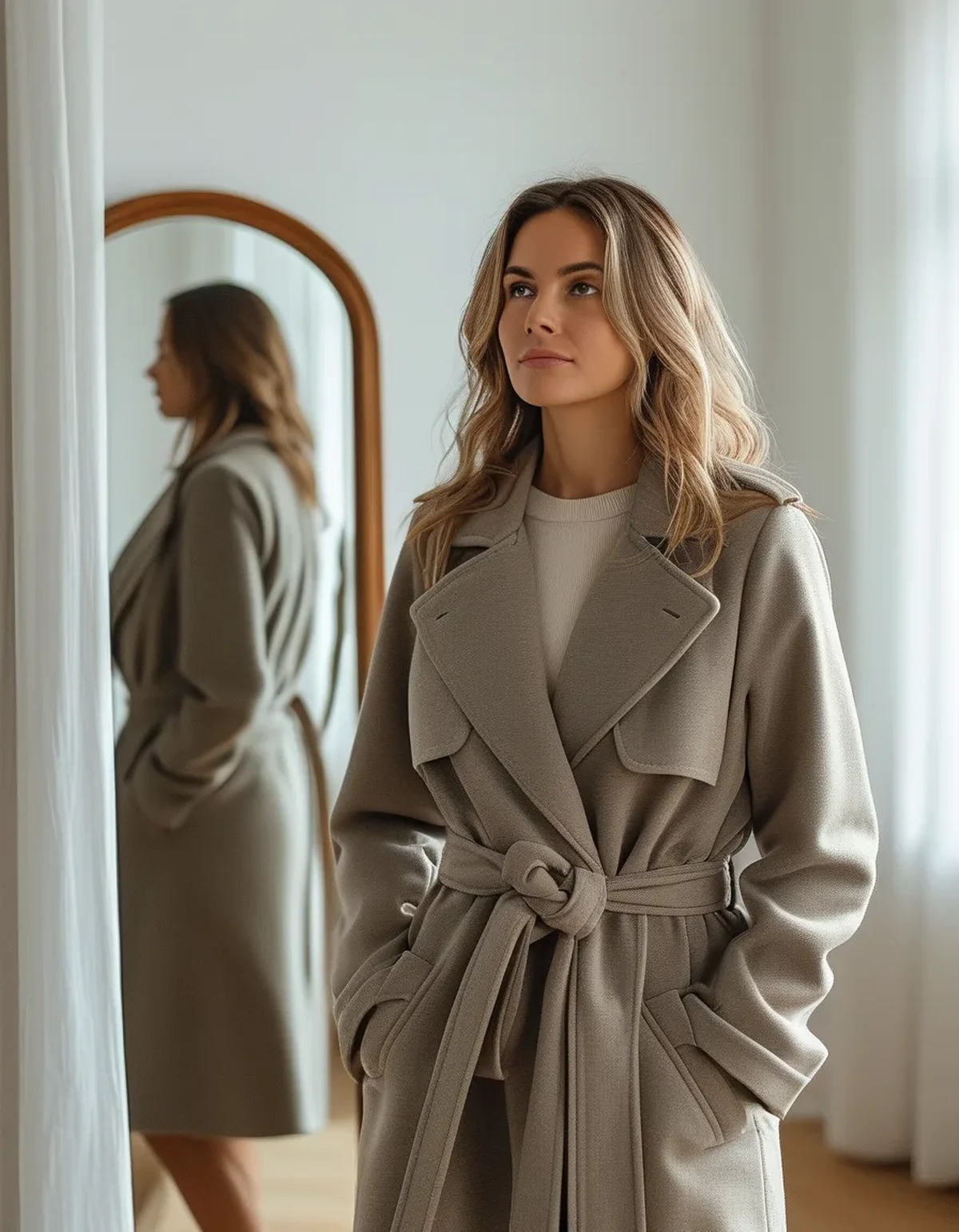
Quick Answer: Belted and cinched styles are designed around an assumed waist position, usually based on a standard torso length. On an hourglass frame, if that position matches your natural waist, the style works exceptionally well. If it sits even an inch or two above or below, the belt lands on a widening part of the torso and creates bulk exactly where the silhouette should narrow. The fix is choosing adjustable-position belts over fixed seams.
You try on two belted jackets in the same size. One looks tailored to you. The other looks like it was designed for a different body entirely - and you cannot immediately see why.
Why does belt position make such a dramatic difference?
Because on an hourglass frame the torso changes width quickly.
The waist-to-hip and waist-to-bust differences are larger than average, which by definition means the circumference changes more per inch of vertical distance. A belt an inch off centre on a straighter frame lands somewhere similar in width. On an hourglass, an inch can be a meaningfully different measurement.
Manufacturers place belts and seams by pattern, not by body. A belted jacket has its cinch point determined by a standard torso length for that size, and torso length varies between people at the same overall size far more than grading assumes.
A belt above the natural waist compresses the ribcage rather than the waist, creating a horizontal line at the widest part of the lower ribs. It looks tight without looking defined, and it is genuinely uncomfortable when breathing hard.
A belt below the natural waist lands on the upper hip flare, which pushes fabric outward and adds visual width at the point where the silhouette should be narrowing again.
And the fabric has to go somewhere. Cinching an area produces gathers above and below the belt. Positioned correctly, those gathers fall into the natural narrowing and read as intentional shaping. Positioned wrongly, they pile onto a part of the body that was already the widest point in that section.
How to find where your natural waist actually is
Most people guess, and the guess is usually low.
The natural waist is the narrowest point of your torso, typically an inch or two above the navel and noticeably above where low- and mid-rise trousers sit. Modern clothing has trained people to think of the waist as much lower than it anatomically is.
The bend test: stand and bend directly sideways. The crease that forms is your natural waist. It is quick, requires nothing, and is more reliable than measuring by eye.
Measure the distance from the underbust to that crease. This number is what determines whether standard belted garments will land correctly on you, and it is worth knowing.
Compare it against a garment that works. If you own one belted piece that fits beautifully, measure from its shoulder seam to the belt. That is your target measurement for shopping, and it is far more useful than a size label.
Short-waisted and long-waisted matter more than height here. Two people of identical height can have a difference of several inches in torso length, and belted garments are unusually sensitive to it - which is why height-based sizing does not solve this problem.
And the practical shortcut: in a fitting room, put the garment on and see where the belt naturally wants to sit when you move. If it migrates up or down, the seam position is fighting your body, and no amount of adjustment will settle it.

What Nobody Tells You About Cinched Activewear
Adjustable-position belts beat fixed cinch seams every time on an hourglass frame. A separate belt on loops, a drawstring, or a wrap closure can be positioned where your waist is. A built-in elasticated cinch seam cannot be moved, and it either matches you or it does not.
Wrap styles are the most forgiving category available. The crossover point is set by how you tie it, which means the garment adapts to your torso rather than the reverse. It is why wrap tops and wrap jackets appear so often in styling advice for curvier frames.
Width of the belt changes the tolerance. A narrow belt has to land precisely; a wider one spans more of the waist area and is more forgiving of a small mismatch. Wide belts are also more comfortable during movement.
Elastic cinching at the back only is a good compromise. It provides shaping without a hard horizontal line across the front, and it accommodates a range of torso lengths better than an all-round seam.
Cinched jackets need room at the bust, not just the waist. Sizing up to fit the bust and relying on the belt to bring in the waist is a legitimate and often superior strategy - and it is what tailors would do anyway.
And the thing most people discover by accident: a belt worn slightly looser often looks better than a tightly cinched one. Over-tightening produces bulk above and below the belt rather than definition, and on an hourglass frame there is already shape to work with - the belt only needs to mark it, not create it.
Buying strategy that avoids the problem
Favour adjustable over fixed. Drawstrings, removable belts, and wrap closures over built-in cinch seams. This single rule solves most of it.
Check where the seam sits before checking the size. In a fitting room, the first question is whether the cinch point lands at your natural waist - not whether the size fits. A wrong position in a perfect size is still wrong.
Size for the bust and let the waist be adjusted. Bust and shoulders are hard to alter; waists are easy to take in. Buying for the largest measurement and adjusting downward is standard tailoring practice for a reason.
Look for princess seams rather than a horizontal cinch. Vertical shaping seams follow the body’s curve continuously rather than creating a single horizontal line, and they suit hourglass frames considerably better.
Note your underbust-to-waist measurement and shop against it. Better retailers publish enough detail to check, and the measurement predicts fit far more reliably than the size.
Be sceptical of elastic-waisted cropped jackets specifically. They are widely produced, they cinch at a fixed height, and that height is set for an average torso length - which makes them one of the least reliable categories for anyone whose torso is longer or shorter than standard.
And do not assume it is you. A garment that produces bulk at your waist is a garment whose cinch point is in the wrong place for your body. There is nothing to correct except the garment.
FAQ: Belted Fit Questions, Answered
Where should a belt sit on an hourglass figure?
At the natural waist - the narrowest point of your torso, usually an inch or two above the navel. Bend sideways and the crease that forms marks the spot. Belts above it compress the ribs; below it, they sit on the hip flare.
Why do belted jackets look bad on me even in the right size?
Almost always because the cinch seam sits at a fixed height determined by a standard torso length, and yours differs. The size is right and the position is wrong, which is not something a different size will fix.
Are wrap styles better for hourglass shapes?
Generally yes, because you set the crossover point yourself rather than accepting a fixed seam. The garment adapts to your torso length instead of assuming one.
Should I size up for the bust and belt the waist?
Yes - this is a sound strategy and what a tailor would do. Bust and shoulder fit are difficult and expensive to alter, while taking in a waist is straightforward and cheap.
Wide belt or narrow belt?
Wider is more forgiving, because it spans more of the waist area and tolerates a small mismatch in position. Narrow belts have to land precisely, which makes them less reliable off the rack.
TL;DR:
- On an hourglass frame, torso width changes fast, so an inch of belt misplacement is a real difference.
- Above the natural waist a belt compresses ribs; below it, it sits on the hip flare and adds width.
- Find your natural waist with the sideways bend test - most people guess too low.
- Adjustable belts, drawstrings, and wrap closures beat fixed cinch seams every time.
- Size for the bust and bring the waist in; the reverse is expensive or impossible.
The jacket is not wrong for your shape. Its belt is sewn at a height that belongs to someone with a different torso length, and no size on the rack changes that.
Keep Reading
This article is for general informational and styling purposes only. Fit, sizing, and product availability may vary.
